Cysparks
How to Start Using AI for Customer Engagement in Kenya
A Practical Guide for Businesses Ready to Compete Customer expectations in Kenya have changed faster in the last three years than in the previous ten. Consumers expect: • Instant replies • Personalized recommendations • 24 hour availability • Seamless movement between WhatsApp, web, phone and social media • Fast resolution without repeating themselves Businesses that fail to meet these expectations lose trust quietly. And lost trust translates to churn, lower lifetime value, and shrinking...
A Practical Guide for Businesses Ready to Compete
Customer expectations in Kenya have changed faster in the last three years than in the previous ten.
Consumers expect:
• Instant replies
• Personalized recommendations
• 24 hour availability
• Seamless movement between WhatsApp, web, phone and social media
• Fast resolution without repeating themselves
Businesses that fail to meet these expectations lose trust quietly. And lost trust translates to churn, lower lifetime value, and shrinking margins.
AI is no longer experimental. It is now one of the most practical tools Kenyan businesses can deploy to improve engagement, reduce cost per interaction, and scale without exploding payroll.
But adoption needs structure.
This guide explains how to approach AI-powered customer engagement properly and how companies like Cysparks help organizations implement it strategically.
Understanding AI in Customer Engagement
Customer engagement is not customer service alone.
It includes:
• Pre-sale interactions
• Inquiries and support
• Retention efforts
• Upselling and cross-selling
• Post-purchase guidance
• Loyalty programs
• Feedback management
AI enhances all of these when implemented correctly.
In the Kenyan context, this often means:
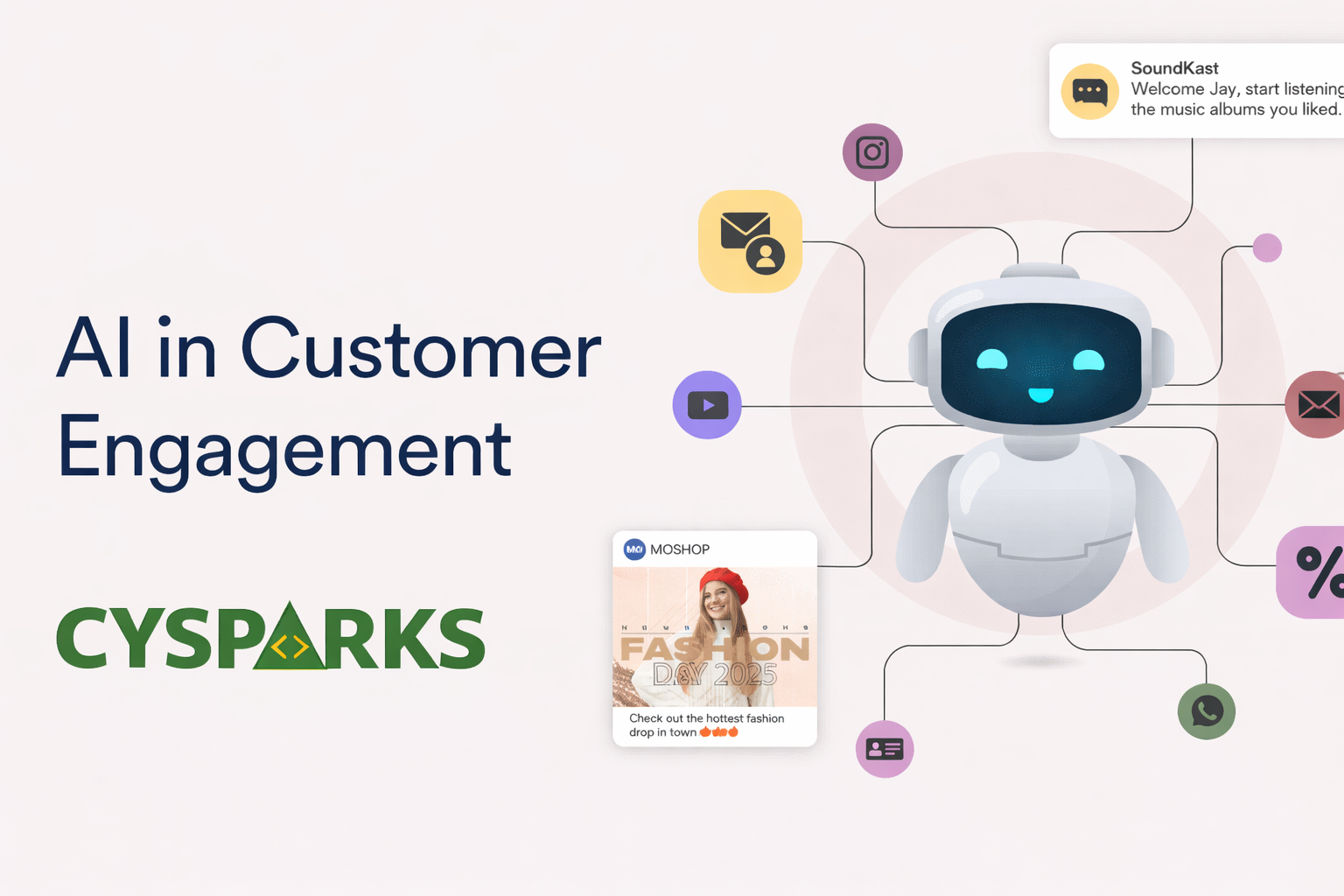
• WhatsApp AI agents handling high-volume inquiries
• AI-driven email automation for schools and institutions
• Smart routing for SACCO or fintech customer tickets
• E-commerce personalization for local retail brands
• Voice-enabled bots for customers who prefer calling
The objective is not replacing humans.The objective is scaling attention.
Why Traditional Engagement Systems Fail
Before AI, businesses relied on:
• Manual ticketing
• Bulk email blasts
• Static FAQ pages
• Call centers with long queues
• Inconsistent messaging across channels
This creates:
• Delayed response times
• Inconsistent information
• Burnt-out support staff
• Poor tracking of user sentiment
• Zero personalization
In Kenya, where competition is rising across education, retail, hospitality, health, and fintech, this approach is no longer sustainable.
Key AI Tools That Actually Work for Customer Engagement
Let’s go deeper than generic lists.
1. Intelligent Chat and WhatsApp Agents
In Kenya, WhatsApp is often more important than websites.
Modern AI agents can:
• Answer FAQs
• Track orders
• Book appointments
• Escalate complex issues
• Integrate with CRM systems
• Operate in English and Swahili
The difference between rule-based bots and true AI agents is context awareness.
Cysparks focuses on AI-powered agents that integrate into existing systems rather than standalone bots.
2. Predictive Customer Behavior Models
Instead of reacting to churn, predictive AI helps you:
• Identify at-risk customers
• Detect declining engagement
• Predict purchase intent
• Personalize outreach timing
For Kenyan e-commerce, schools, fintech platforms, and subscription businesses, this increases retention significantly.
This requires clean data pipelines and integration with your backend systems. That’s where most businesses fail.
3. Personalization Engines
Basic personalization is using someone’s name.
Real personalization includes:
• Location-aware pricing
• Behavior-based offers
• Purchase history recommendations
• Dynamic website content
• Tailored email journeys
For example:
A Kenyan school can automate follow-ups for parents based on application stage.A retail store can offer discounts based on browsing behavior.
This is where AI increases conversion rates.
4. Voice AI for Kenyan Markets
Many users prefer voice interaction.
Voice AI can:
• Handle inbound calls
• Collect structured responses
• Route complex queries
• Operate outside office hours
For sectors like healthcare, real estate, and SACCOs, this reduces pressure on call centers.
Step-by-Step: How to Start Using AI for Customer Engagement
This is where execution matters.
Step 1: Audit Your Current Engagement Gaps
Ask:
• Where are customers waiting too long?
• Where do you lose leads?
• Where do staff spend most repetitive time?
• Where do customers drop off?
Cysparks typically runs structured engagement audits before recommending AI.
Without this, you risk automating the wrong thing.
Step 2: Define Clear ROI Metrics
Avoid vague goals like “improve service.”
Define measurable objectives:
• Reduce response time by 50 percent
• Lower cost per ticket by 30 percent
• Increase retention by 15 percent
• Increase conversions from WhatsApp by 20 percent
AI projects must be outcome-driven.
Step 3: Choose Between Build or Integrate
Businesses must decide:
• Buy existing AI tools
• Integrate APIs into systems
• Build custom AI agents
Cysparks often recommends hybrid approaches:Use proven models but customize logic for Kenyan workflows.
Step 4: Pilot Before Full Deployment
Start small:
• Deploy AI on one channel
• Test for one use case
• Measure adoption
• Collect feedback
• Refine
Scaling without testing leads to expensive mistakes.
Step 5: Train Staff and Establish Escalation Rules
AI must have clear boundaries.
Humans should handle:
• Emotionally sensitive cases
• Complex disputes
• High-value negotiations
The best systems combine AI efficiency with human judgment.
Common Mistakes Kenyan Businesses Make
- Deploying bots without backend integration
- Over-automating without human fallback
- Using poor quality data
- Underestimating change management
- Expecting instant ROI without optimization
Cysparks mitigates these risks by embedding governance, data structure, and monitoring systems into every implementation.
Measuring Success
Track:
• First response time
• Resolution time
• Customer satisfaction score
• Conversion rate
• Cost per interaction
• Retention rate
Advanced implementations also monitor:
• Sentiment analysis trends
• Escalation frequency
• Agent accuracy rates
Data must inform continuous improvement.
Future-Proofing AI in Kenya
The next stage of AI engagement includes:
• Multimodal agents combining voice, text, and image
• Emotion-aware AI responses
• Full enterprise AI orchestration
• Autonomous AI agents handling multi-step workflows
Kenyan companies that implement structured AI systems today will be positioned ahead of competitors in 3 to 5 years.
Where Cysparks Fits
Cysparks is not just deploying chatbots.
We:
• Design AI architecture
• Integrate AI into CRMs and ERPs
• Develop enterprise-grade AI agents
• Implement predictive analytics systems
• Customize multilingual AI workflows
• Train teams
• Monitor and optimize post-deployment
We also leverage Aivara to streamline AI development and model integration, reducing friction for businesses and startups.
Final Thought
AI for customer engagement is not about appearing modern.
It is about:
• Faster decisions
• Lower operational costs
• Better retention
• Higher conversion
• Improved brand trust
Kenyan businesses that approach AI strategically will dominate their markets.
Those that delay will struggle to keep up.
If your organization is ready to implement AI customer engagement properly, Cysparks can guide the full journey from audit to deployment to optimization.
How useful was this article to you?
Found a mistake in this article?
Report it to our editorial team: